
What kind of wallpaper is it?
Check whether the product is pre-pasted, paste-the-wall, peel-and-stick or another material. The packaging or manufacturer’s installation guide can clarify the recommended adhesive, surface and handling.
Home / Wallpaper guide
Before the roll is opened
A little planning can clarify what product to choose, what details to share and which parts of the room deserve a closer look.
Houston wallpaper project notes
These general pointers are not a substitute for the product's own instructions or a review of the actual wall. For help with a specific room, talk with the installer and bring the product information.
Check whether the product is pre-pasted, paste-the-wall, peel-and-stick or another material. The packaging or manufacturer’s installation guide can clarify the recommended adhesive, surface and handling.
Look for the vertical repeat and match type on the label. A larger repeat can affect how panels align and how much paper may be needed. Keep the roll label so that details are available during planning.
Paint condition, texture, patches, old wallpaper and adhesive can influence preparation. A wall that looks smooth from across the room may still need closer inspection before a new covering is applied.
Note windows, doors, outlets, built-ins, corners and areas behind fixtures. They shape where panels begin and end and may make a simple wall-width estimate less straightforward.
If you can, note each wall’s width and height separately. Deducting openings alone may not predict roll use because repeats, panel placement and off-cuts also matter. Share estimates as a starting point, not a final material count.
Yes. Product-specific directions describe the surfaces and room conditions suitable for its adhesive. Follow the manufacturer’s guidance and share it before discussing installation.
Tell the installer about visible damage, moisture staining, loose paint, texture or past repairs. Do not cover an active moisture issue; identify and resolve its cause before applying wallcovering.
Your city, the room, approximate wall measurements if known, product information and a brief description help start a useful conversation. Photos are optional, not a requirement to make an inquiry.
Pattern and room
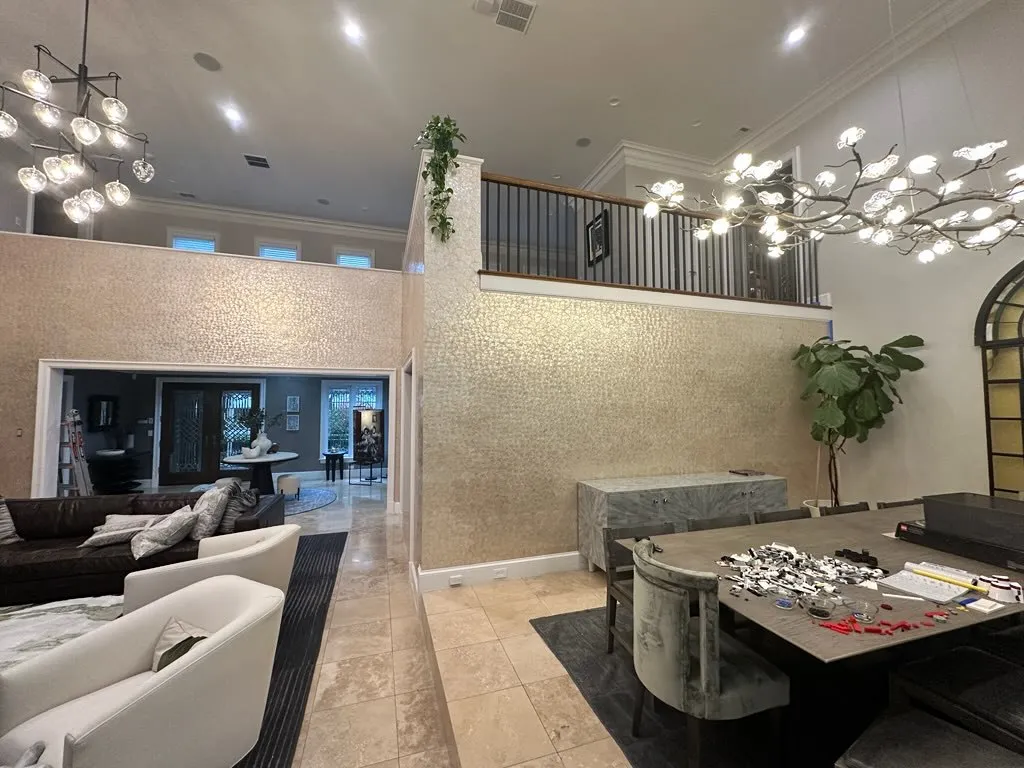
Small samples are useful for color and texture. A larger view can help reveal scale, direction and how a motif changes at the edges. If you have sample lengths or product images, keep them with the installation notes.
For specialty wallcoverings, bring the exact brand and instructions; surfaces, adhesives and handling vary by product.
Have the product details?
Call the installer or send a short note from the contact page.